
Get Support
123-456-789-10
The Importance of Shop Drawings
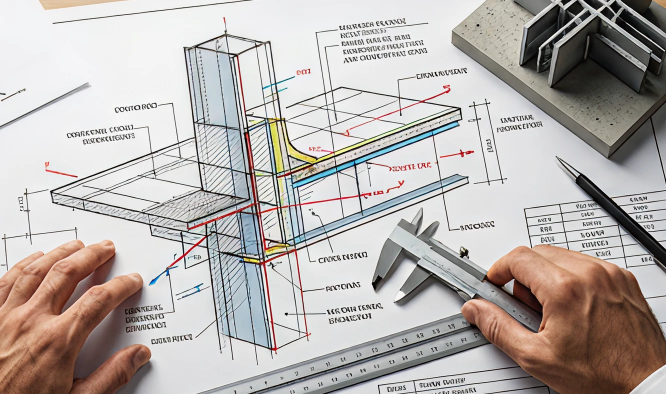
Working drawings are one of the most important tools used in any successful construction, finishing, or interior design project. They do not only show the general appearance of the project, but also explain the accurate execution details needed by contractors and technicians on site. Through these drawings, dimensions, levels, materials, service locations, flooring and ceiling details, and the method of executing each element are clearly and professionally defined.
The importance of working drawings appears clearly when actual work begins on site. They reduce mistakes, prevent conflicts between work teams, help control the budget, and make execution follow-up and handover easier. The clearer and more professional the working drawings are, the less random decisions and costly changes the project will face, and the more likely it is to reach a precise final result that matches the required design.
Main Topics in This Article
- Why are working drawings an essential step before execution?
- How do working drawings turn design into a practical reality?
- The impact of working drawings on construction and finishing quality
- Their role in preventing conflicts between work teams on site
- The importance of working drawings in defining flooring and ceiling details
- Organizing electrical, plumbing, and air conditioning locations accurately
- How do working drawings help in choosing suitable materials?
- Their role in speeding up execution stages and reducing delays
- The importance of working drawings in follow-up and handover
- Risks of executing a project without clear working drawings
- Working drawings as a technical reference between the owner and contractor
- Tips for getting professional working drawings before starting your project
1- Why are working drawings an essential step before execution?
Working drawings are considered an essential step before execution because they give all project parties a clear vision of what will be implemented on site. Instead of relying on verbal explanations or personal judgment, all details become documented in accurate drawings that can be referred to during the work.
Having working drawings before starting the project helps organize the execution steps, clarify the requirements of each stage, and reduce the possibility of random decisions on site. This makes the project more organized from the beginning and saves a great deal of time and effort during execution.
- Clarity before execution: because all details are defined in advance.
- Organizing work stages: according to clear and trackable steps.
- Reducing random decisions: on site during execution.
- A unified reference: for the owner, contractor, and engineer.
2- How do working drawings turn design into a practical reality?
The general design shows the idea and the expected final look, but working drawings explain how this design can actually be implemented on site. They turn lines and ideas into accurate details that include dimensions, element locations, installation methods, and work sequence.
Through working drawings, the contractor can understand exactly what is required, technicians can execute each item according to clear instructions, and the project owner can follow up on the work and compare what is being executed with the approved drawings. This makes the design applicable without guesswork or major differences.
- Turning the idea into details: that can be executed on site.
- Clarifying installation methods: for each project element.
- Defining dimensions: instead of relying on personal estimation.
- Connecting design with execution: in a practical and organized way.
3- The impact of working drawings on construction and finishing quality
Working drawings directly affect construction and finishing quality because they define the correct method for executing each item and prevent randomness that may lead to visible defects or future problems. Quality does not depend only on the materials used, but also on execution accuracy and the work teams’ commitment to details.
When working drawings are clear, it becomes easier to execute flooring, ceilings, walls, installations, and finishes in a coordinated way. The possibility of the final result differing from the agreed design is also reduced, giving the project a better appearance and higher quality.
- Improving execution quality across all project stages.
- Reducing defects caused by misunderstanding or guesswork.
- Achieving better matching between the design and the final result.
- Ensuring coordination of finishes and materials within the spaces.
- Improving the quality of final handover.
4- Their role in preventing conflicts between work teams on site
In any construction or finishing project, more than one team works on site, such as construction, electrical, plumbing, air conditioning, gypsum, flooring, carpentry, and painting teams. Without clear working drawings, conflicts may happen between these works, leading to breaking, rework, or delays in the timeline.
Working drawings help coordinate service locations, movement paths, device locations, and ceiling and wall heights before work begins. As a result, each team knows its role accurately, and the work is executed in a logical sequence that reduces conflicts and problems on site.
Important note: Conflicts between work teams are among the most common causes of delay and additional cost in projects, and good working drawings help detect these conflicts before execution begins.
5- The importance of working drawings in defining flooring and ceiling details
Flooring and ceiling details require high accuracy during execution because any difference in levels, directions, or joints may appear clearly in the final result. Working drawings help define the type of flooring, installation direction, joint locations, and floor levels between different rooms and spaces.
Working drawings also clarify gypsum ceiling details, hidden lighting locations, spotlights, air conditioning outlets, and required heights. This prevents mistakes that may appear after finishing and makes the final result more coordinated and professional.
- Flooring: defining directions, joints, and levels.
- Ceilings: clarifying levels, gypsum locations, and lighting.
- Lighting: defining spotlight, chandelier, and hidden lighting positions.
- Air conditioning: coordinating air outlets with ceiling design.
6- Organizing electrical, plumbing, and air conditioning locations accurately
One of the most important benefits of working drawings is that they define electrical, plumbing, and air conditioning locations accurately before executing walls, floors, or ceilings. These works are usually hidden after finishing, and any mistake in them may require breaking and costly repairs later.
The drawings clarify switch and socket locations, lighting points, water outlets, drainage, air conditioning units, and service routes according to furniture distribution and daily use of the spaces. This makes the project more comfortable and easier to maintain in the future.
- Defining switch and socket locations before execution.
- Coordinating water and drainage outlets with bathrooms and kitchens.
- Defining air conditioning unit locations and air outlets.
- Avoiding breaking after finishing is completed.
- Making future maintenance easier.
7- How do working drawings help in choosing suitable materials?
Working drawings help in choosing suitable materials because they clarify where each material will be used, how it will be installed, and the approximate quantities needed. Instead of buying materials randomly, drawings can be used to define project requirements more accurately.
They also help compare available alternatives, such as flooring types, wall claddings, ceiling materials, doors, and lighting units. This makes material selection more connected to the design, budget, and practical use of the space.
- Defining material locations: inside each project space.
- Calculating quantities: more clearly before purchasing.
- Reducing waste: caused by buying unsuitable materials.
- Coordinating the final look: between floors, walls, and ceilings.
8- Their role in speeding up execution stages and reducing delays
Working drawings help speed up execution stages because they reduce repeated questions on site and provide clear answers for contractors and technicians before starting each item. When details are available and defined, the work team does not have to wait for new decisions or continuous clarifications.
The drawings also help arrange priorities and define the sequence of work between different teams, reducing downtime and making execution smoother. This directly reflects on the project duration and quality of completion.
- Fewer questions: because details are explained in the drawings.
- Faster decisions: before starting execution on site.
- Organized teams: according to the sequence of work stages.
- Less downtime: caused by missing information or poor coordination.
9- The importance of working drawings in follow-up and handover
The importance of working drawings is not limited to the execution stage only; it also extends to follow-up and handover. They give the engineer or project owner a clear reference for comparing the executed works with what was agreed upon, whether in dimensions, materials, or element locations.
With accurate working drawings, receiving the works becomes easier and clearer, and any difference or mistake can be detected quickly before moving to the next stage. This helps protect project quality and reduce disputes with the contractor.
- Reviewing executed works based on a clear reference.
- Detecting mistakes before approving each stage.
- Making it easier to prepare a snag list before handover.
- Reducing disputes about what was agreed upon.
- Improving the quality of final handover.
10- Risks of executing a project without clear working drawings
Executing a project without clear working drawings may lead to many problems, such as the contractor misunderstanding the design, some items being executed incorrectly, increased costs, work delays, and defects appearing after finishing. The project owner may also find it difficult to follow up on site or know whether execution matches what is required.
Relying on the general design only may be acceptable in some simple projects, but it is not enough for projects that include many details or precise finishes. Therefore, working drawings are not a luxury; they are an important way to protect the project from mistakes and unexpected costs.
- Misunderstanding the design: between the owner, contractor, and execution team.
- Higher costs: because of changes and rework.
- Project delays: due to missing clear details.
- Poor finishing quality: because there is no accurate reference.
- Difficult handover: because standards are not clearly defined.
11- Working drawings as a technical reference between the owner and contractor
Working drawings are an important technical reference between the owner and the contractor because they clearly define the scope of work and required details. If there is any difference during execution, the drawings can be used to identify what is required instead of relying on verbal discussions or different interpretations.
These drawings also help unify all parties’ understanding of the project and make it easier to agree on cost, duration, and execution method. The more accurate the drawings are, the fewer disputes happen during work, and the clearer and more organized the project becomes.
Defining the scope of work
Working drawings help clarify the required items and define exactly what should be executed inside the project.
Reducing disputes
Having a clear technical reference reduces different interpretations between the owner, contractor, and execution team.
12- Tips for getting professional working drawings before starting your project
To get professional working drawings, you should first define your project needs accurately, then work with a provider experienced in preparing execution details, not just general design. The drawings should also be reviewed carefully before approval to ensure they include the important details needed by the execution team.
It is also better to coordinate architectural, electrical, mechanical, and structural drawings before starting work so that any conflict can be detected early. The more accurate the preparation stage is, the easier and more professional the execution will be.
Review drawings before execution
Early review helps detect notes and modify them before they become a problem on site.
Choose a specialized provider
A specialized provider can prepare clear and complete drawings that help execute the project with higher quality.
Do you need accurate working drawings for your project?
Contact us now to prepare clear working drawings that help you execute your project with higher quality, reduce mistakes on site, and coordinate technical and architectural details before starting work.